privacy is a day-to-day concern
Noticed: Spring 2026
Location: Victoria Line, TFL
technology
technology
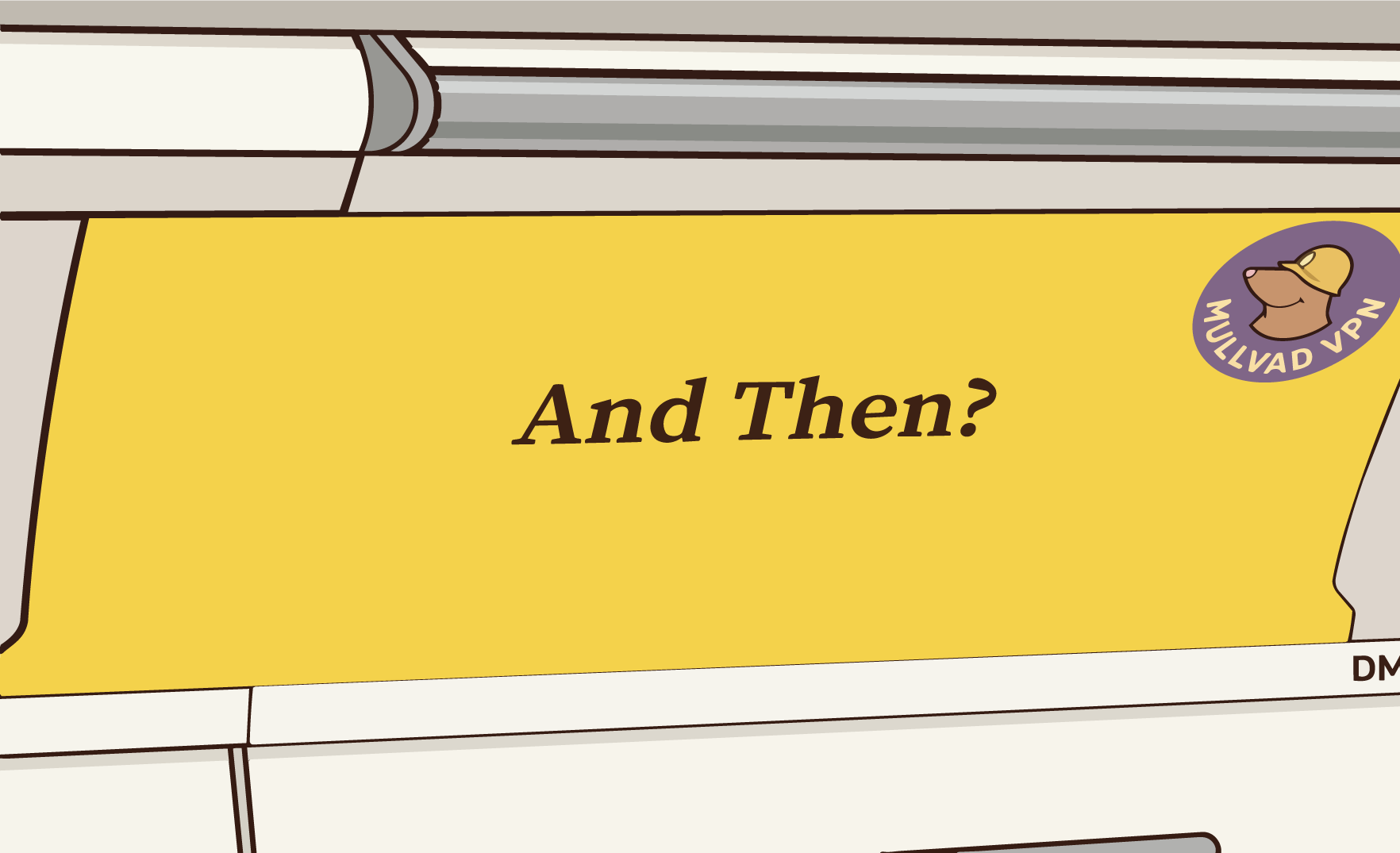
I was particularly excited to dissect this one, especially since this advertisement drew curiosity to far more people than just me. With no abrasive product placement and a seemingly random statement, people already took to social media to ask what this is about.
Marketing like this is usually pulled off by companies big enough to rely on their brand image, like the latest iPhone. But before my research, I had no idea about Mullvad, or what ‘And then?’ could be referring to.
To orient you, they are a Swedish Virtual Private Network (VPN) service, a software which essentially enables private browsing. VPNs work by encrypting your internet traffic and hiding your IP address, which complicates how users may be tracked.
A), your internet provider cannot easily see which sites you visit
B) your approximate location is harder to identify via websites
and C), advertisers struggle to link activity to your device specifically.
In a world where internet use has become as nominal as going to the toilet, privacy online has clearly moved out of IT departments and become the average person’s concern.
On to their stylistic choice, “And then” references the video component to their campaign. Which was interestingly rejected for broadcast in the UK.
The premise of the video is that internet use without privacy controls like VPNs, allows governments to watch people. It is introduced by stating non-private browsing helps us to track criminals, ‘and then’ terrorists, ‘and then’ paedophiles. The video changes gears as the ‘and then’ keeps expanding, to include other members of society, journalists, then politicians, then you and me.
This argues surveillance is justified by claiming it is only reserved for the baddies. But once you begin justifying the surveillance of anyone, it is then a slippery slope.
This was rejected by Clearcast, the body who checks whether TV adverts comply with UK advertising rules. They claimed it was unclear, it raised sensitive topics like child abuse and terrorism, and that it implies a VPN can help criminals evade the police.
This irony was not lost on Mullvad, who claimed their video about surveillance was itself being censored. However, I think their response here still achieves a lot. They both nod to the video, and intrigue viewers with a startling lack of information. To the extent some viewers took to X and Redditt to discuss it.
It may have happened unintentionally, but the controversy that ensued from their campaign may have done more than bolster intrigue, it stimulated discussion.
The advert in itself, is an excellent microcosm of the digitised world today. Somebody in my seat in 2100 can treat this as evidence that privacy itself became an advertisable product in our world.
A huge amount of infrastructure today belongs online. Train tickets, banking, self-identification. In light of this, public appetite for privacy online has been created. You only need to be the average commuter to be warned to protect your privacy, and that it a distinct moment in time for me.